Subtropical conditions in Orleans Parish sustain mosquito reproduction through nine continuous months of the year, driven by an average annual rainfall exceeding 62 inches and high ambient humidity. In dense urban…
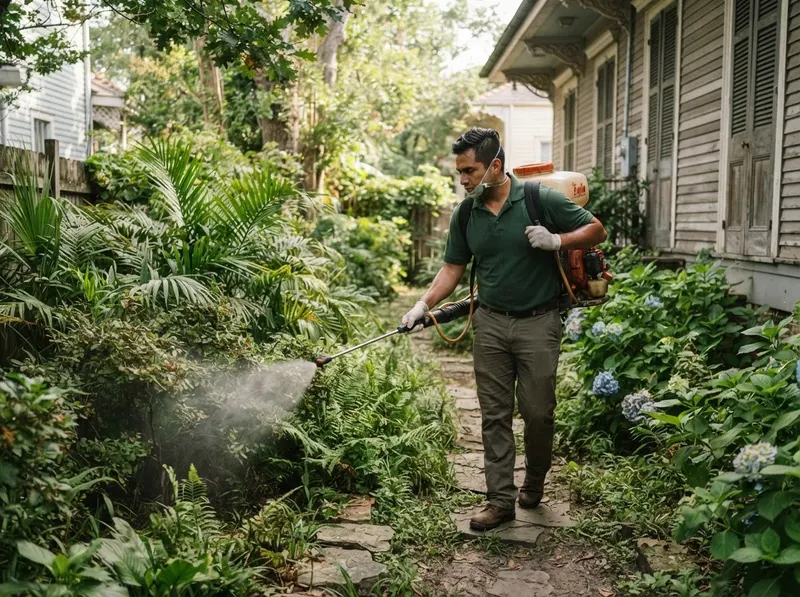
Subtropical conditions in Orleans Parish sustain mosquito reproduction through nine continuous months of the year, driven by an average annual rainfall exceeding 62 inches and high ambient humidity. In dense urban neighborhoods like the French Quarter and the Marigny, brick-walled courtyards with limited air circulation create shaded microclimates where invasive Asian tiger mosquitoes rest during daytime peaks. Raised center-hall cottages and double shotguns in Uptown, Carrollton, and the Garden District present an additional vector: open crawlspaces built on historic brick piers. High water tables throughout Mid-City and Gentilly cause moisture pooling under these sub-floors, transforming foundation soil into protected resting harborages that standard aerial municipal spraying cannot reach.
A targeted perimeter strategy addresses these architectural vulnerabilities by distinguishing between surface water mitigation and structural foliage application. Property owners with dense ornamental gardens containing broad-leaf hostas, banana trees, and creeping fig require focused micro-droplet treatments applied beneath foliage canopies, where female mosquitoes shelter from midday heat. In low-lying terrain near City Park, Bayou St. John, and the Lake Pontchartrain Lakefront in Lakeview, standing water accumulation in catch basins and historic stone fountains demands biological larvicides, such as Bacillus thuringiensis israelensis (BTI), which disrupt larval development within 24 hours without harming beneficial insects, masonry, or ornamental fish.
Selecting between monthly seasonal barrier programs and single-event applications depends on lot topography and neighbor density. A single barrier misting fits outdoor private gatherings by suppressing active biting adults for approximately 14 to 21 days; however, persistent urban reinfestation from adjacent unmanaged lots in tightly packed parcels like Bywater or Algiers Point requires regular 21- to 30-day applications from April through October to maintain control. The trade-off centers on visit frequency versus long-term larvae suppression: one-time interventions address immediate adult populations, whereas continuous seasonal service breaks continuous reproduction cycles across rainy summer months.
Every job gets a firm, written price after a free on-site visit.
Tell us about your mosquito control job in New Orleans and we'll send a clear, written quote, usually the same day.
 Magnolia Heron Pest Control