Pest Control Service New Orleans delivers precise structural defense designed specifically to safeguard timber framing, plaster walls, and raised subfloors from regional subtropical pressure. Property owners seeking dependable pest control service near me receive conservation-grade treatments formulated around regional soil composition, continuous river humidity, and local architectural profiles.
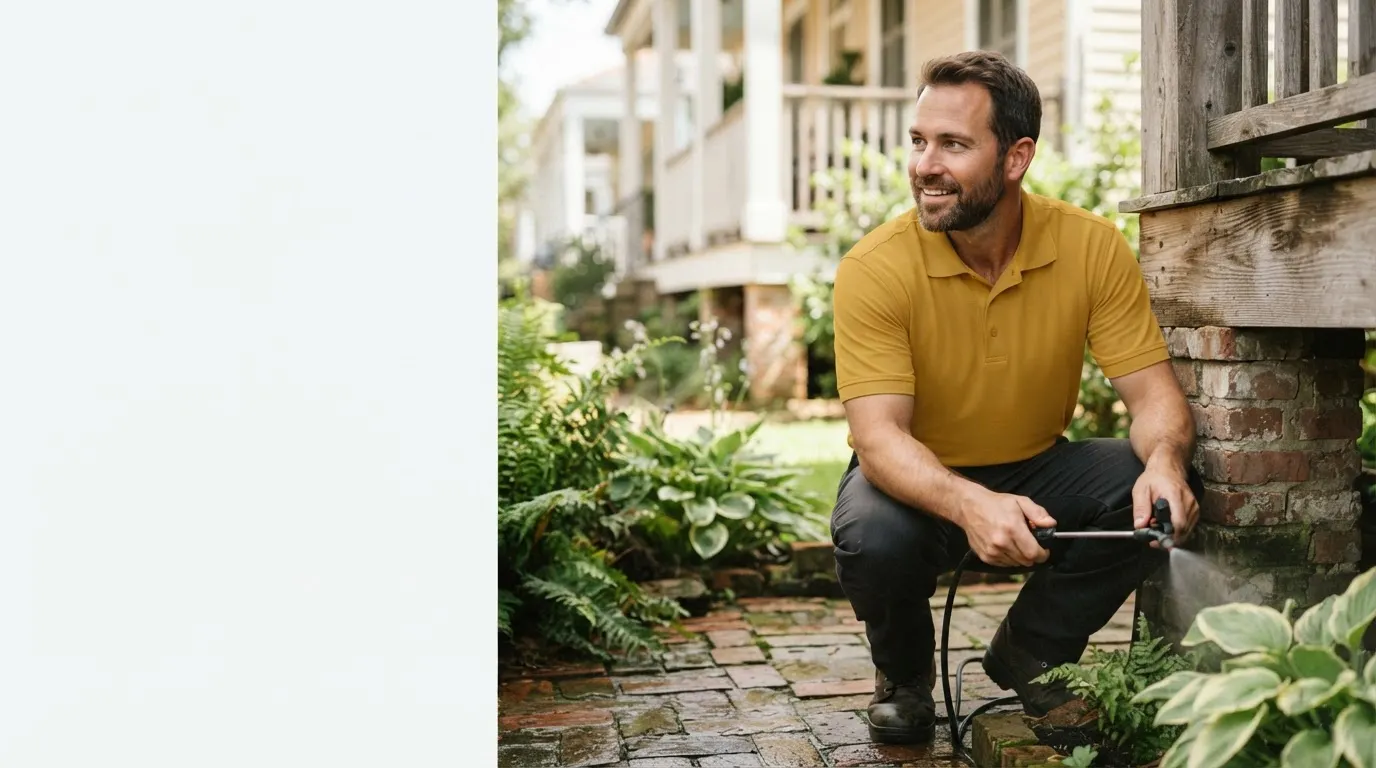
Pest control service in New Orleans is an integrated structural and biological management system designed to eliminate wood-destroying organisms, invasive insects, and rodents from historic raised-pier and modern slab residential properties across Orleans Parish.
Every service reflects the same meticulous attention to detail, whether it's a single job or a larger pest control service project across New Orleans.
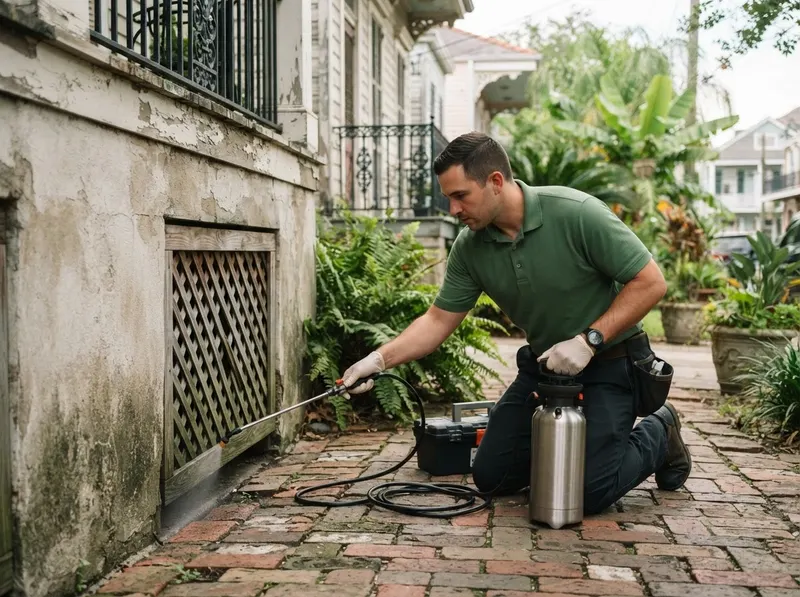
Whole-home protective programs calibrated for raised historic cottages and modern slab properties throughout New Orleans. Routine evaluations focus on foundation perimeters, plumbing penetrations through antique flooring, and high-moisture interior zones. Interventions prioritize botanical-derived microencapsulations that remain non-staining to historic heart pine, lath, and heart cypress trim. Technicians survey floorboards, verify ventilation openings beneath subfloors, and address seasonal pest entry vectors around porches, windowsills, and decorative architectural cornices without staining painted facades. Treatments focus on precise crack-and-crevice placements rather than broad surface applications, preserving clean air standards within interior family spaces.
Get a quote →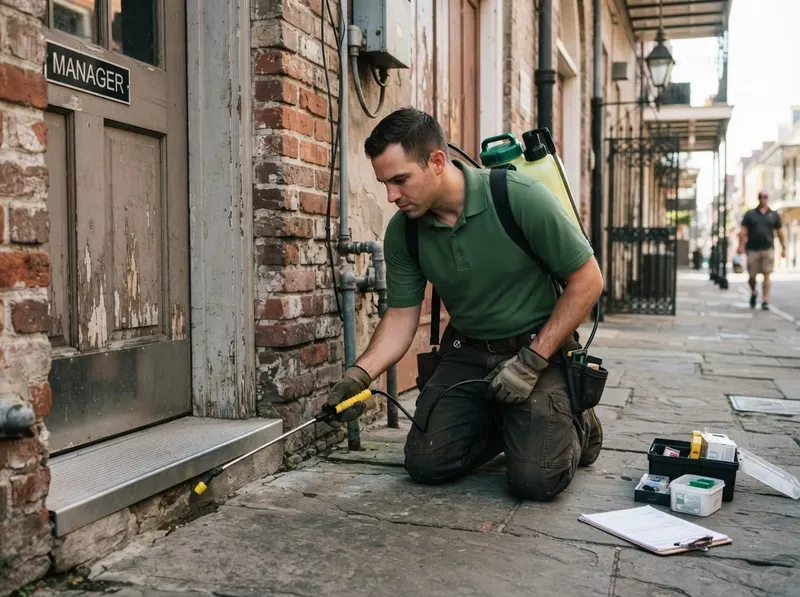
Regulatory-compliant structural protection tailored to hospitality venues, restaurants, and retail properties across the French Quarter and Downtown. Protocol schedules integrate discreet nocturnal service windows, comprehensive electronic monitoring logs, non-toxic monitoring stations, and health-code compliant insect documentation designed for strict municipal health inspections. Technicians assess commercial food prep lines, brick basement cellars, and exterior trash handling zones, applying mechanical exclusions and pheromone traps to stop pest incursions before biological vectors breach kitchen perimeters. All service routines adhere strictly to Louisiana Department of Agriculture and Forestry guidelines for safe commercial pest mitigation.
Get a quote →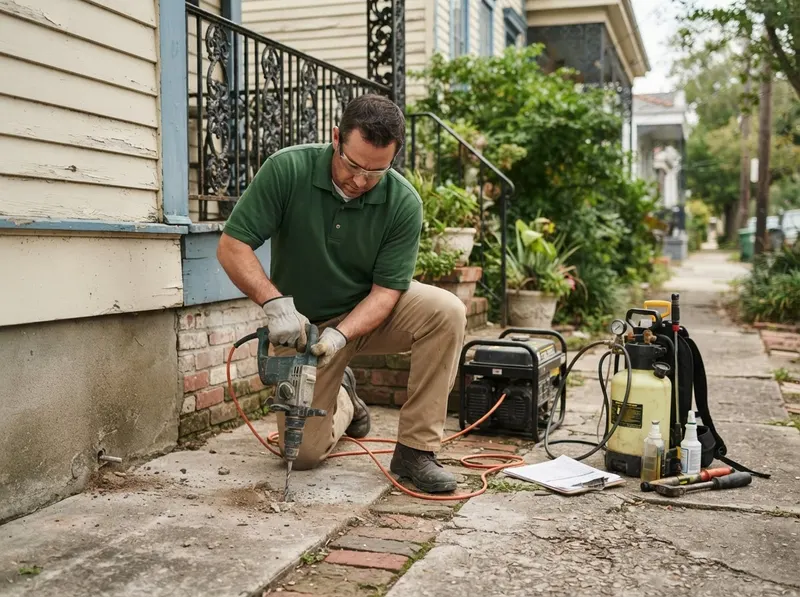
Targeted mitigation engineered specifically against invasive Formosan subterranean termites (Coptotermes formosanus) and native subterranean species. Treatments incorporate exterior subterranean monitoring networks, precise non-repellent termiticide liquid barriers applied along brick piers, and targeted foam applications into antique structural sill plates to stop active feeding without damaging decorative finishes. Technicians calculate exact soil dilution rates around soft historic brick footings, preventing moisture damage while binding active termiticide molecules directly to damp alluvial soil grains. Continuous electronic monitoring options alert specialists to foraging workers months before aerial swarmers emerge inside living areas.
Get a quote →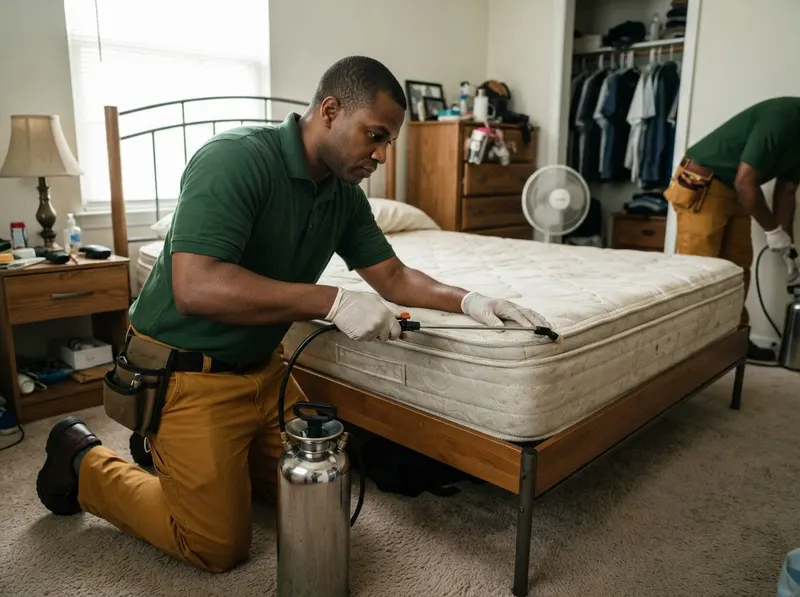
Thermal and localized insecticidal protocols built for rapid eradication within private residences, rental duplexes, and guest lodgings. Treatments combine directed high-temperature clean airflow exceeding 125 degrees Fahrenheit with residual perimeter applications along baseboards, switch plates, and furniture frames, eradicating all biological life stages including eggs. Specialized heat-generating equipment penetrates deep mattress cores, historic baseboard recesses, and antique headboard seams without releasing hazardous airborne toxins or damaging antique furnishings. Post-treatment inspections verify complete temperature saturation throughout insulated wall structures, ensuring zero insect survival across all treated rooms.
Get a quote →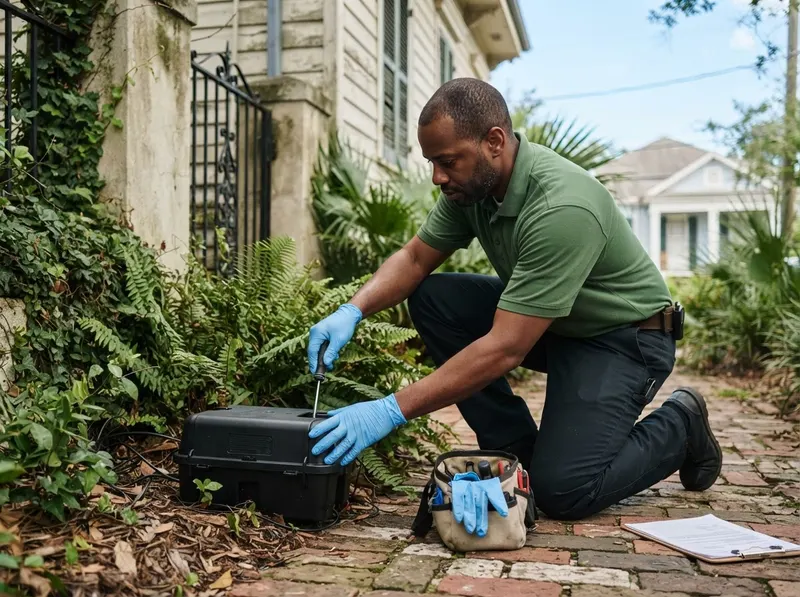
Comprehensive indoor rodent suppression focused on roof rats (Rattus rattus) and Norway rats navigating utility corridors, live oak branches, and crawlspaces. Interventions combine custom hardware-cloth exclusion over subfloor access points, attic sanitation, mechanical trapping inside non-living zones, and permanent exterior perimeter baiting enclosures. Technicians map specific travel corridors along overhead electrical drops, plumbing risers, and raised foundation beams, sealing every structural opening exceeding one-quarter inch. Complete sanitary sweeps remove soiled insulation and biological markers, eliminating pheromone pathways that draw outdoor rodent colonies into quiet ceiling spaces.
Get a quote →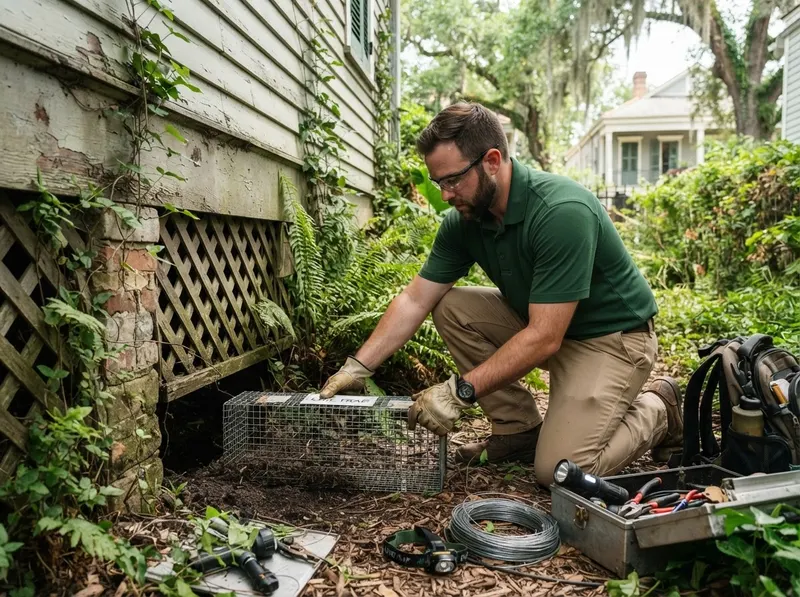
Humane trapping, safe extraction, and structural exclusion for opportunistic wildlife species including raccoons, Virginia opossums, and bats nesting within historic attics, soffits, or crawlspaces. Exclusion measures utilize heavy-gauge welded steel wire installed over architectural gable louvers, preserving historic exterior silhouettes while halting animal re-entry. Technicians conduct initial visual surveys using non-destructive inspection devices to verify whether nursing offspring are present, ensuring humane, synchronized multi-stage extraction. After animal removal, technicians sanitize attic surfaces, replace contaminated thermal batts, and install permanent mechanical copper-mesh flashing along compromised fascia boards.
Get a quote →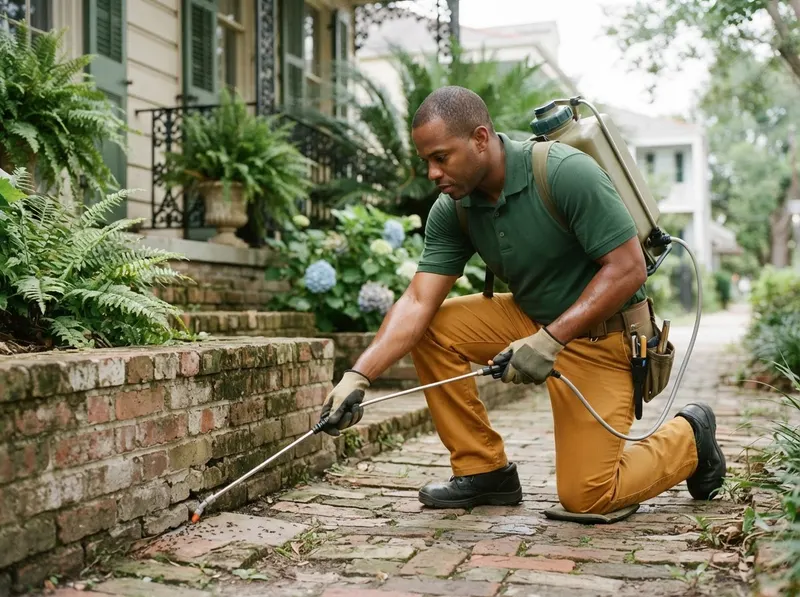
Targeted species-specific elimination of odorous house ants, Argentine ants, and damaging carpenter ants nesting within damp exterior woodwork. Biological bait formulations transfer active chemistry deep into subterranean colonies, neutralizing queen reproduction rather than relying on surface sprays that trigger harmful colony budding across wall spaces. Technicians pinpoint satellite nests nestled inside damp fascia boards, decorative porch columns, and shaded yard soil, deploying specialized sucrose and protein matrices tailored to the seasonal nutritional preferences of each distinct ant species. Regular perimeter treatments maintain protective barriers that prevent outdoor worker ants from crossing thresholds during wet weather.
Get a quote →
Aggressive eradication programs neutralizing American cockroaches (periplaneta americana) entering from municipal drainage lines and German cockroaches (blattella germanica) infesting kitchens. Treatments combine insect growth regulators, targeted moisture mitigation advice, specialized gel bait matrices, and barrier seals placed along subfloor pipe collars. Technicians inspect wall voids behind sinks, grease traps, and bathroom cabinets, placing micro-doses of non-repellent gel baits where foraging nymphs consume active chemistry safely away from food preparation counters. Persistent exterior barrier dusts injected into weep holes and foundation vents eliminate perimeter roach traffic before insects migrate indoors.
Get a quote →You get a firm, itemized quote for your pest control service before any work begins, no surprises, no pressure.
Careful prep, tidy work, and a full cleanup when we are done. We treat your home and belongings like our own.
The same trusted, background-checked team from the first call to the final check.
Selecting structural pest interventions in Orleans Parish requires matching treatment methods directly to foundation geometry, timber age, and moisture exposure. If an owner manages a raised center-hall cottage or historic shotgun home with open pier foundations, liquid soil barrier applications and non-invasive exterior bait stations provide subterranean defense without disrupting antique heart-pine framing or decorative plaster ceilings. If a property rests on a continuous concrete slab common throughout Lakeview or Gentilly, directional perimeter baiting and slab-injection protocols address perimeter expansion joints where hidden insect vectors penetrate.
The structural trade-off centers on treatment permanence versus interior physical disruption: liquid perimeter trenching establishes unbroken chemical boundaries around brick footings but requires controlled soil excavation, whereas bait station arrays demand recurring quarterly monitoring cycles while maintaining zero chemical contact with antique interior surfaces. For properties suffering from acute rodent penetration, exterior exclusion using welded steel hardware cloth preserves historic facade aesthetics while permanently blocking access corridors, traded off against the higher labor cost of detailed architectural custom-fitting compared to temporary rodenticide bait boxes placed along open ground. When structural pest damage extends into interior wall voids, targeted localized micro-injections of non-staining dry foam stop subterranean termite feeding directly inside heart-pine framing timbers without necessitating the removal of historic horsehair plaster or hand-planed cypress trim.
For intense structural infestations involving deep-seated drywood colonies or severe pest penetrations within dense lath walls, full structural fumigation provides complete biological eradication throughout all wall cavities, traded off against forty-eight to seventy-two hours of total household evacuation and specialized exterior preparation. Modern monolithic slab dwellings built in the late twentieth century throughout Eastern New Orleans or Algiers face different structural trade-offs: slab drilling delivers immediate chemical barriers beneath carpeted or tiled floors but alters subfloor substrates permanently, whereas targeted perimeter baiting networks monitor subterranean termite colony movement continuously without puncturing interior concrete envelopes. Commercial hospitality spaces along Royal Street and Magazine Street must balance round-the-clock pest defense against customer visibility and food safety compliance: non-chemical thermal remediation, discreet nighttime application schedules, and structural exclusion prevent insect harborage around grease interceptors and brick courtyards without releasing volatile chemical compounds into indoor guest environments during operating hours.
Every project gets a firm, written price after a free on-site visit. Ranges below for orientation.
Tell us about your pest control service job and we'll send a clear, written quote, usually the same day. Or just call and talk to a real New Orleans pro.
(504) 389-6488
The combination of sea-level elevation, river-delta alluvial soils, and relentless sub-tropical moisture creates unmatched biological pressure on New Orleans real estate. Historic structures elevated on brick piers across the Garden District, Uptown, and the Bywater rely on well-ventilated crawlspaces that simultaneously invite Formosan termite foraging tubes and rodent infiltration from nearby drainage canals. Effective pest mitigation in Orleans Parish demands tailored strategies that actively safeguard century-old virgin cypress and heavy heart pine without disrupting delicate historic lime mortar or antique lath-and-plaster construction. In low-lying pockets near City Park, Bayou St. John, and Lake Pontchartrain, high water tables prevent subterranean termites from digging deep colonies, forcing them to forage directly along surface soil layers and climb foundation footings. In neighborhoods like Mid-City and Lakeview, high regional humidity and prolonged summer downpours saturate foundation perimeters, breaking down ordinary chemical barriers faster than in dry geographic zones. Conversely, dense urban blocks in the French Quarter and Marigny feature zero-lot-line townhomes sharing continuous party walls; in these attached architectural envelopes, roaches and rodents move unimpeded between separate properties through shared service chases and historic floor framing. Addressing these distinct local dynamics requires an understanding of New Orleans soil strata, historic building materials, and local municipal regulations governing historic preservation commission districts.
Free estimates for New Orleans & the surrounding area.
 Magnolia Heron Pest Control